
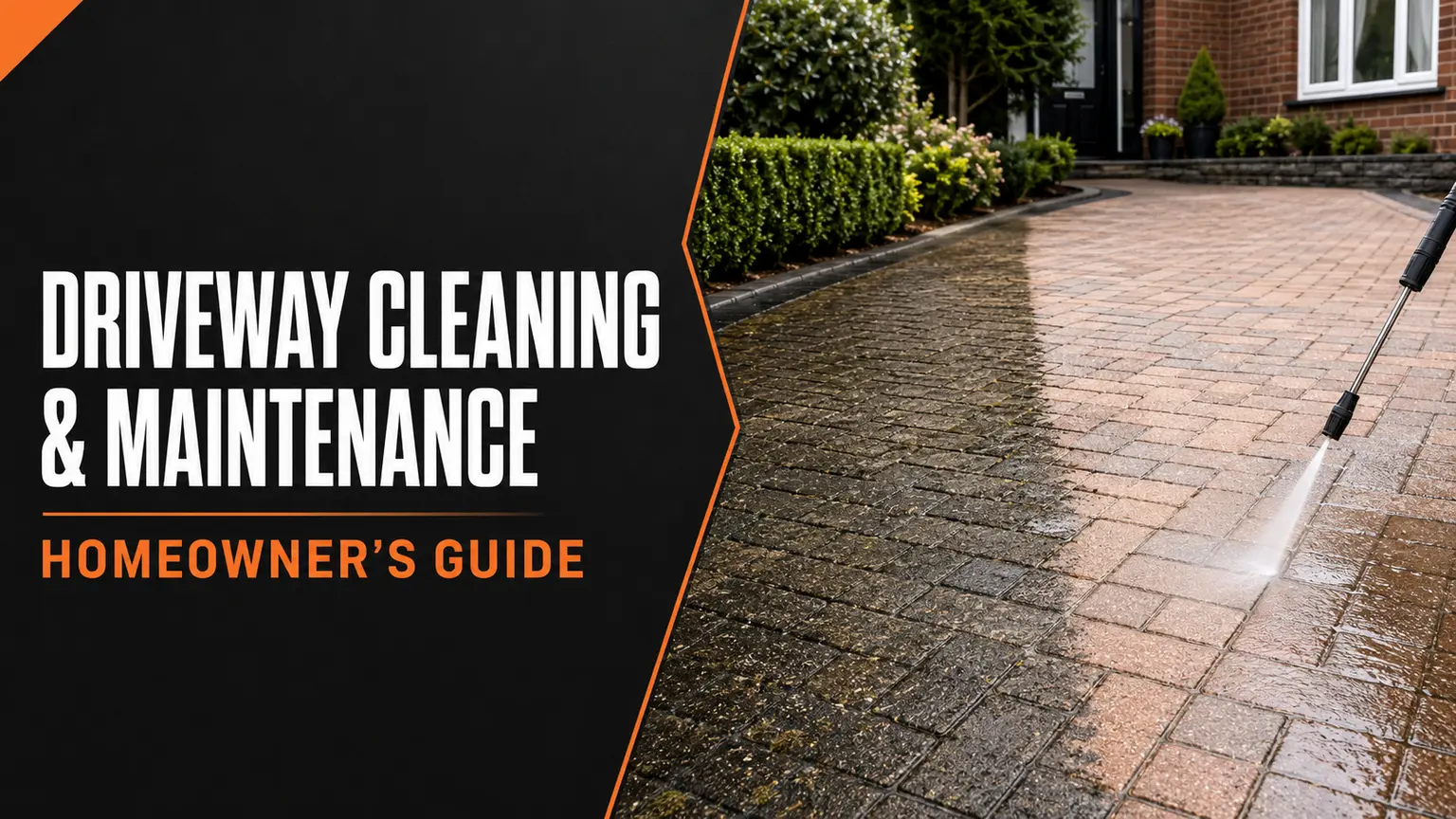
Driveway Cleaning and Maintenance: A Homeowner’s Guide
Driveways are exposed to vehicles, leaves, soil, weather, oil and everyday foot traffic. A sensible maintenance plan keeps the surface presentable, helps drainage continue working and makes it easier to notice defects before they become larger repairs. The correct method depends on the material and any existing coating or sealer.
Identify the Surface Before Cleaning
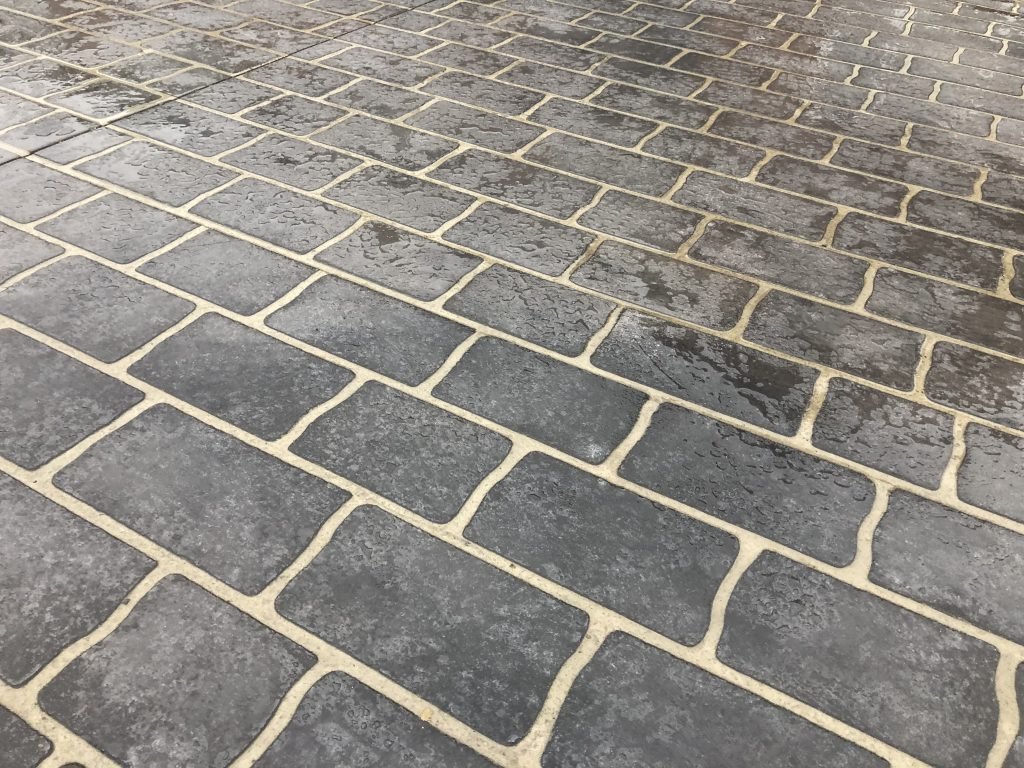
Block paving, pattern-imprinted concrete, stencilled concrete, resin, tarmac and paving slabs do not all need the same treatment. Before using chemicals or pressure equipment, identify the surface, jointing system and any coating. Where records are unavailable, test a discreet area or ask a professional to assess it. The block paving and tarmac guide, pattern-imprinted concrete guide and stencilled concrete and resin guide explain how those surfaces differ before maintenance is planned.
| Surface | Main maintenance points |
|---|---|
| Block paving | Joints, weeds, settlement, edge restraints and replacement jointing material after cleaning |
| Decorative concrete | Compatible cleaning, condition of the sealer, joints, cracks and worn traffic areas |
| Resin surface | Debris removal, suitable cleaning method, local damage and condition of the underlying base |
| Tarmac | Edges, cracking, soft spots, contamination and local repairs |
| Paving slabs | Jointing, movement, staining, algae and damaged units |
Begin with Routine Housekeeping
Sweeping removes leaves, grit and soil before they hold moisture, block channels or become ground into the surface. Clear debris from corners, walls, garage thresholds and the edges of drainage channels. Deal with spills promptly using a product suitable for the material and follow its instructions.
Avoid mixing chemicals or applying a strong treatment without confirming compatibility with the surface, sealer, nearby planting and drainage route.
Use this inspection-to-cleaning sequence:
- Sweep the whole driveway and clear channels, gullies and edges.
- Identify the surface, jointing system and any existing coating or sealer.
- Photograph stains, cracks, loose joints, sunken areas and damaged edges.
- Arrange repairs or drainage checks before cleaning where movement or ponding is present.
- Test the proposed cleaning method in a discreet area.
- Clean with a surface-appropriate method and control the runoff.
- Reinspect joints, drainage and repaired areas once the surface is dry.
Use Pressure Washing Carefully
Pressure washing can remove surface dirt, but excessive pressure, a narrow nozzle or holding the lance too close may disturb block-paving joints, mark softer materials or damage a decorative coating. Use an appropriate setting, keep the lance moving and test a less visible area first.
Professional cleaning may be preferable where the driveway has an unknown coating, extensive staining, loose joints, fragile edges or signs of movement. Cleaning should not be used to disguise damage that needs repair.
Manage Weeds, Moss and Algae
Growth often establishes where debris, moisture and shade combine. Remove loose material and improve routine sweeping where practical. Choose any treatment for the identified surface and follow the product label, including instructions about pets, planting and runoff.
Repeated growth in one location may indicate shade, standing water, soil entering the joints or a drainage issue. Addressing the cause can be more effective than repeatedly treating the visible growth.
Protect Joints, Edges and Restraints
After block paving is cleaned, inspect the joints and replace appropriate jointing material where it has been removed. The required material depends on the installed system; do not assume every paved surface uses the same sand or compound.
Check kerbs, edge restraints, channels and transitions for movement. Loose edges can allow the surface to spread or settle. Early local repairs may reduce the area that needs attention later.
Keep Drainage Routes Clear
Clear channel drains, gullies, grates and outlets so water can leave the driveway as designed. Remove silt carefully and check that covers are seated correctly. Persistent ponding, sinking or repeated silting may indicate a levels, sub-base or drainage issue that cleaning alone will not solve.
Do not direct contaminated wash water into planting, neighbouring property or an unsuitable drain. The cleaning contractor should explain how runoff will be controlled.
Inspect Cracks, Settlement and Damage
Look for cracks, loose blocks, sunken areas, crumbling edges, rocking slabs and damage around inspection covers. Photograph the issue and note whether it changes over time or after heavy rain.
Some defects can be repaired locally; others reflect movement or weakness beneath the surface. Ask for an inspection before sealing or resurfacing, because a new coating cannot correct an unstable base.
If you are unsure whether maintenance is still worthwhile, read Replace or Resurface a Driveway? How to Decide for a practical comparison of cleaning, local repair, refurbishment, resurfacing and complete replacement.
Consider Sealing Only When Appropriate
Some surfaces may benefit from a compatible sealer, while others should not be sealed or require detailed preparation first. Confirm the product, surface compatibility, expected appearance, slip considerations, drying or curing requirements and future maintenance before proceeding.
Resealing should be based on condition, traffic, exposure and the existing product rather than one fixed calendar interval. Applying an incompatible coating or sealing contamination into the surface can create additional work.
Seasonal Maintenance Checklist
- Remove leaves, grit and loose debris before they accumulate.
- Check channels, gullies and outlets after heavy weather.
- Deal with fresh spills using a suitable method.
- Inspect joints, edges, cracks and local settlement.
- Photograph any damage that appears to be changing.
- Arrange repairs before cleaning or coating hides the condition.
DIY Cleaning or Professional Help?
Routine sweeping and careful spot cleaning may be manageable for many homeowners. Professional help is sensible where the surface type is uncertain, pressure washing could disturb joints or coatings, specialist stain treatment is required, drainage is blocked or repairs need to be coordinated with cleaning.
What Affects a Cleaning Quotation?
- Surface material, size and level of contamination
- Access, water supply and protection of nearby walls or doors
- Oil, rust, paint, tyre marks or organic staining
- Weed, moss or algae treatment
- Block-paving joint replacement
- Repairs, sealing or refurbishment requested separately
- Runoff control and waste handling
Common Maintenance Mistakes
- Using maximum pressure on every surface
- Applying a chemical without checking compatibility
- Removing block-paving joint material and not replacing it
- Sealing over dirt, moisture or unresolved damage
- Ignoring ponding, sinking or repeatedly blocked drains
- Treating every stain with the same product
Questions for a Cleaning Quotation
- Is the proposed method suitable for this exact surface and coating?
- Are stain treatment, weed removal and runoff control included?
- Will block-paving joints be replenished afterwards?
- How will walls, doors, vehicles, planting and drains be protected?
- Are repairs, sealing or refurbishment priced separately?
- What aftercare is recommended following the work?
Plan the Next Step
Stamp Stone serves homeowners across Leicester, Leicestershire, Nottinghamshire and Derbyshire. Send clear photographs, the approximate driveway size, surface type and details of stains, movement or damaged areas so the most suitable inspection, cleaning or repair approach can be discussed.
Learn about driveway cleaning and jet washing, explore block-paving refurbishment and spray-on resurfacing, browse genuine Stamp Stone driveway and patio projects, view all services, browse more homeowner advice and guides, or request a free quotation.