
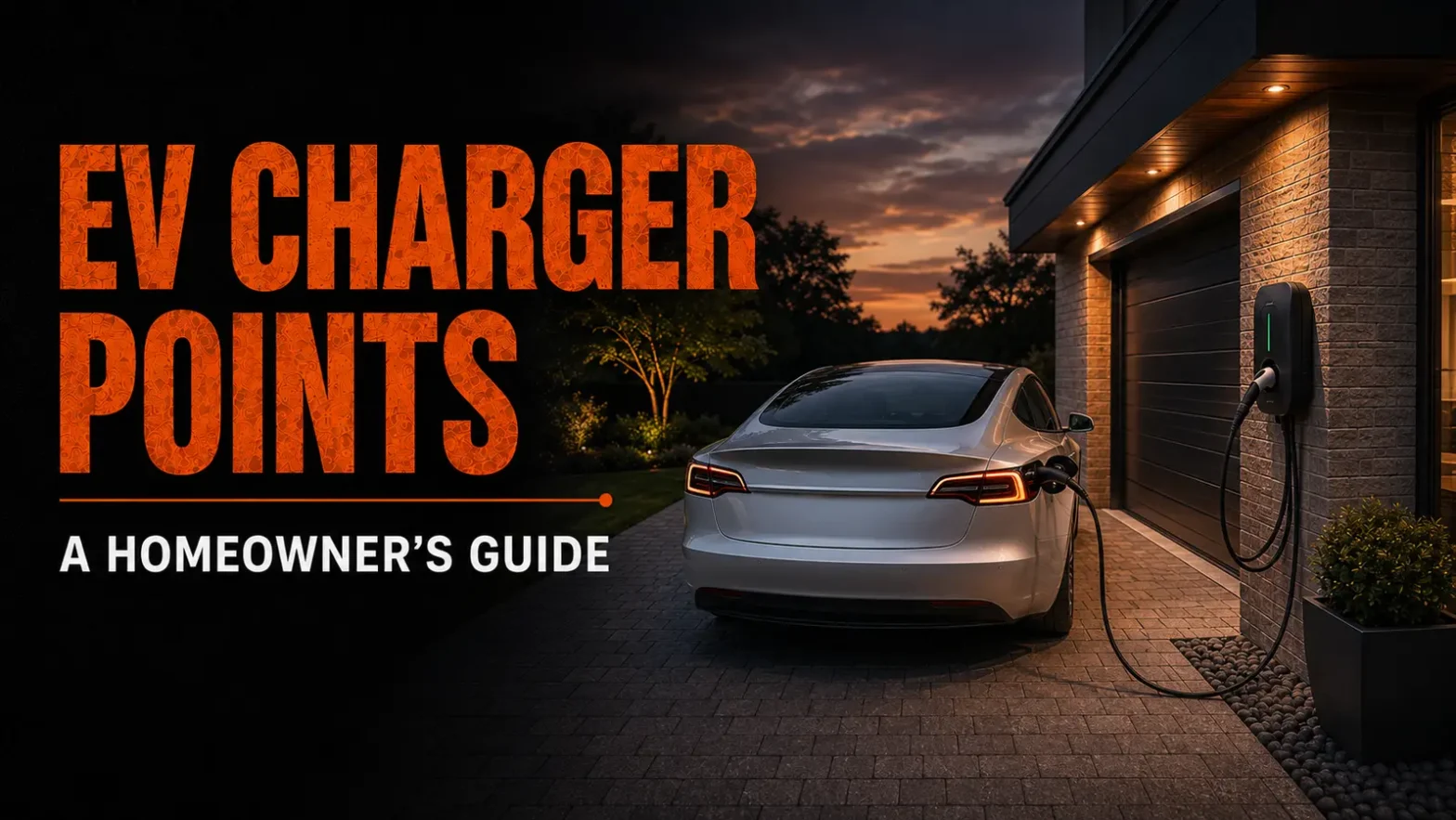
Planning a Home EV Charger Point: A Homeowner’s Guide
An EV charger project often involves two separate workstreams: electrical installation and physical preparation around the driveway or parking space. Planning them together can prevent finished paving from being lifted later and helps each contractor understand where their responsibility begins and ends.
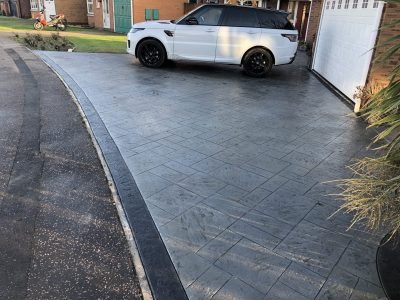
Plan the Charger and Driveway Together
Discuss the charger before a driveway is installed, resurfaced or landscaped. The parking position, charger location, cable route, ducting, drainage and final surface can then be coordinated before construction begins.
For a shorter decision-stage overview, read EV charger and new driveway cable-route planning, which focuses specifically on what to coordinate before the final paving goes down.
Stamp Stone can help plan relevant groundwork, duct routes and surface reinstatement as part of a wider driveway project. The electrical assessment, charger selection, protective equipment, connection, testing and required notifications must be handled by a suitably qualified EV chargepoint installer.
Who Is Responsible for What?
| Party | Typical responsibilities |
|---|---|
| Homeowner | Confirm parking needs, vehicle details, property permissions, preferred charger position and future plans. |
| Driveway or groundwork contractor | Coordinate excavation, agreed ducting, surface levels, drainage, reinstatement and physical protection details. |
| Qualified EV installer | Assess the electrical supply, design the installation, select suitable equipment, install, test, certify and complete required notifications. |
The precise split should be agreed in writing before work starts. The electrical installer should specify any duct, containment or route requirements that the groundwork contractor must follow.
Create one shared handover note before excavation:
- Mark the charger, vehicle and proposed cable-route positions on a photograph or sketch.
- Record the installer’s duct, draw-cord, containment and entry-point requirements.
- Confirm who excavates, supplies materials, backfills, reinstates the surface and photographs the completed route.
- Give the same agreed note to the homeowner, electrical installer and groundwork contractor.
Choose a Practical Charging Position
Consider where the vehicle normally parks, which side the charging port is on and how the lead will reach it. The cable should not need to cross a regular walking route, gate opening or shared access. Also consider bins, garage doors, future vehicles and whether the charger remains reachable when more than one car is parked.
A wall-mounted charger may be suitable where the building is close to the parking space. Other layouts may require a pedestal or another approved mounting arrangement designed by the electrical installer.
Electrical Assessment Comes First
Home charging is specialist electrical work. The installer should assess the supply, earthing arrangements, protective equipment, proposed charger, cable route and any current approval or notification requirements. Driveway planning does not replace that assessment.
For current installer and grant information, consult the official GOV.UK chargepoint installer search and GOV.UK chargepoint grant guidance. Eligibility, equipment requirements and application processes can change, so do not rely on an old grant figure or arrange installation before checking the current scheme terms.
Cable Routes, Ducting and Groundwork
A cable route may follow a wall, pass through a building or travel through approved containment beneath landscaping. Where underground ducting is proposed, agree who supplies and installs it, its start and finish points, required dimensions, draw cord, separation from other services and how entries will be sealed.
The electrical installer should provide the technical route requirements before excavation. The driveway contractor can then coordinate the physical work with the sub-base, edging and final surface. Unrecorded ducts or improvised routes can create problems when the cable is installed or maintained.
Protect Drainage and Finished Surfaces
Charger preparation should not obstruct drainage channels, alter necessary falls or make inspection covers inaccessible. Agree how trenches will be backfilled and compacted and how paving, concrete, resin or tarmac will be reinstated.
Where the charger could be struck by a vehicle, ask the electrical installer and contractor whether a suitable location, wheel stop, kerb detail or protective post is required. Protection should not create a new trip hazard or restrict access.
Permissions and Property Arrangements
Homeowners, tenants, leaseholders and landlords may have different permission requirements. Shared parking, communal areas, listed properties, rented homes and on-street parking can involve additional approvals or specialist solutions. Confirm property rights and permissions before ordering equipment or starting groundwork.
Allow for Future Use
Discuss a second electric vehicle, a different parking layout, solar generation, battery storage or replacement charger with the electrical installer. Future capacity and equipment selection are electrical-design decisions, but a carefully planned route or spare duct may reduce later groundwork where the design supports it.
Typical Coordination Sequence
- Photograph and measure the parking area, building and possible route.
- Ask a qualified EV installer to assess the electrical installation.
- Agree the charger position and technical route requirements.
- Coordinate ducting, groundwork, drainage and surface details.
- Complete physical preparation in the agreed sequence.
- Have the qualified installer complete, test and certify the charger work.
- Retain installation, warranty and aftercare documents.
What Affects the Project Cost?
- Distance between the electrical supply and parking space
- Wall-mounted, pedestal or protected mounting arrangement
- Excavation, ducting and reinstatement requirements
- Driveway material and the stage at which work is coordinated
- Electrical supply upgrades or additional equipment identified by the installer
- Permissions, shared access or specialist parking arrangements
Obtain separate, clearly scoped quotations where electrical and groundwork services are supplied by different businesses.
Common Planning Mistakes
- Completing the driveway before the electrical route is agreed
- Positioning the charger without checking the vehicle’s charging-port location
- Allowing the lead to cross a path or gate opening
- Installing ducting without the electrical installer’s specification
- Assuming grant eligibility or permission without checking current guidance
- Failing to record the route of underground ducts and services
Homeowner Checklist
- Photograph the parking space, walls, consumer-unit area and possible route.
- Record the vehicle model, charging-port side and normal parking position.
- Identify drains, inspection covers, gates and shared access.
- Confirm landlord, leaseholder or property permissions where relevant.
- Ask the electrical installer for written route and duct requirements.
- Agree who handles excavation, ducting, reinstatement and protective details.
Questions for Your Quotations
- Who completes the electrical survey, installation, testing and notifications?
- Where will the charger, vehicle and charging lead sit?
- What cable containment, ducting or groundwork is required?
- How will the driveway surface and drainage be protected or reinstated?
- Are permissions, network checks or grant conditions relevant?
- What documents and aftercare information will be provided?
Coordinate the Next Step
Stamp Stone serves homeowners across Leicester, Leicestershire, Nottinghamshire and Derbyshire. Share photographs of the parking area and likely route, together with the postcode and driveway plans, so the physical preparation can be discussed alongside the electrical installer’s requirements.
Explore EV charger point preparation, read our EV charger and new driveway planning article and future-proofing guide for likely utilities, compare driveway and groundwork services, see genuine Stamp Stone driveway projects for surface and parking-layout ideas, browse more homeowner advice and guides, or request a project quotation.