
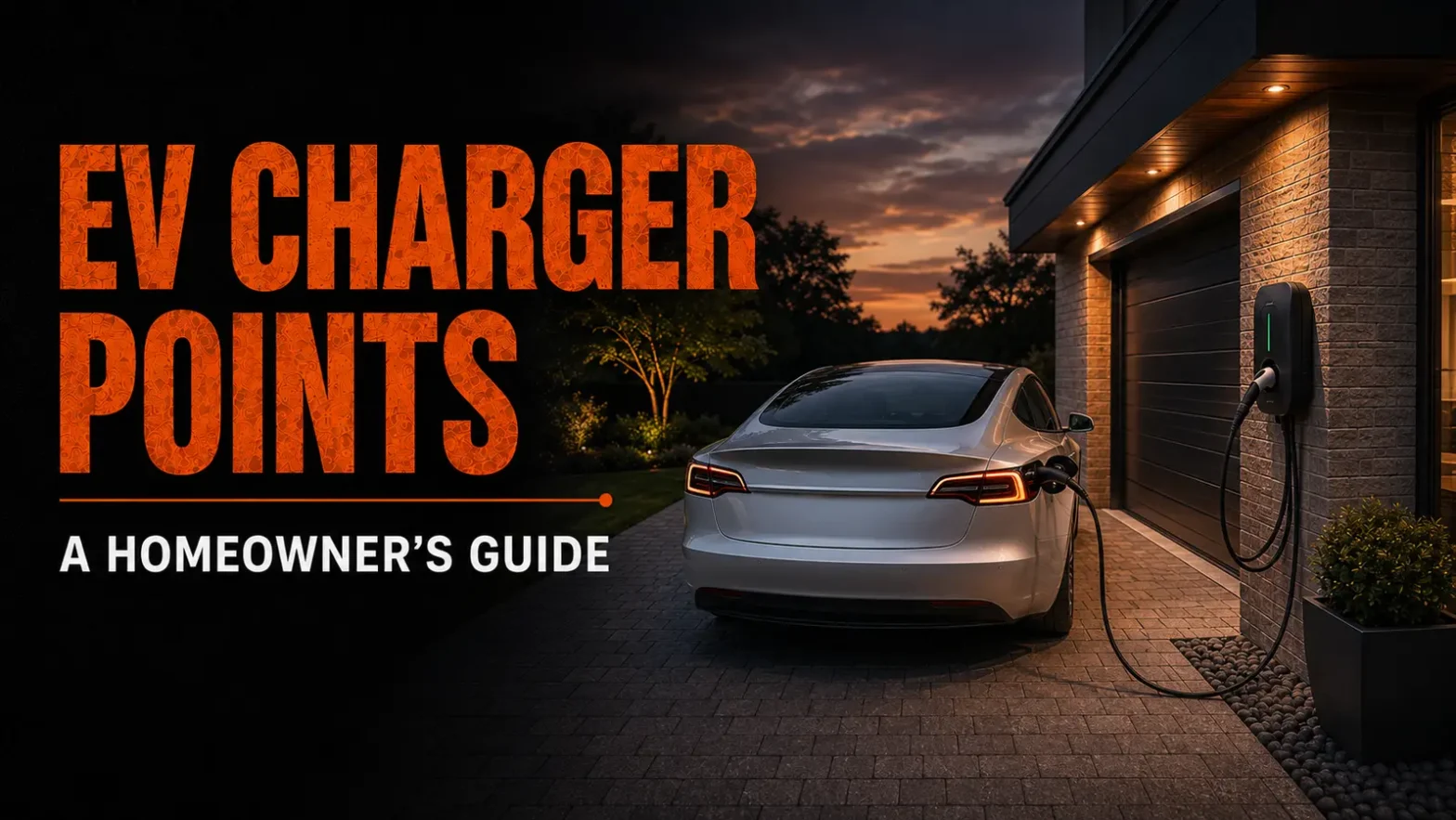
If a home EV charger is likely in the near future, it makes sense to think about the cable route before a new driveway or patio is installed. The goal is not to design the electrical installation yourself; it is to avoid finishing the paving and then discovering that the route for the charger requires fresh excavation.
Choose the parking position first
The charger location should relate to where the vehicle will actually park. Think about which side of the car the charging port is on, how the cable will reach the vehicle without crossing a regular walking route, and whether more than one parking space may need access in future.
Our home EV charger planning guide covers these early layout decisions in more detail.
Coordinate the cable route before paving
The electrical installer should determine the correct cable specification, protection and route. From a groundworks perspective, the important point is timing: if the route needs to cross a driveway, path or landscaped area, coordinate that work before the final surface is laid.
Discuss the proposed route with both the electrical installer and the driveway contractor so ducts, excavation or other preparations are not guessed at independently.
Do home EV chargers need planning permission?
Planning Portal guidance says that where a home has off-street parking, a domestic EV charger is likely to fall under permitted development rights if the relevant criteria are met. Planning permission may still be required in situations such as listed buildings, conservation areas, on-street parking or locations where permitted development is restricted.
Check the current Planning Portal EV charger guidance for the property before installation.
Electrical work still needs the correct installer
Electrical installation work in a home or garden must comply with the building regulations. Planning Portal recommends using a competent registered installer who can deal with the electrical design, certification and notification requirements.
Stamp Stone’s role is focused on the driveway, groundwork and coordinated outdoor preparation rather than carrying out specialist electrical design unless the appropriately qualified installer is involved.
Think about drainage and levels at the same time
A charger base, wall position or parking bay should not be planned without considering where surface water will travel. If the driveway is being replaced, review driveway drainage and permeable surfacing at the same time as the cable route.
For sloping properties, our guide to driveway levels, drainage and access on a slope covers additional considerations.
Future-proof the wider frontage
The same project may also include lighting, gates, fencing or landscaping. Coordinating these routes before excavation is complete can reduce the need to disturb a finished surface later.
See our garden and driveway lighting, landscaping and fencing and groundworks and digger hire pages for related planning.
Questions to discuss before the driveway starts
- Where will the vehicle normally park?
- Where is the proposed charger position?
- Will the electrical route cross the driveway or path?
- Does the installer need a duct or excavation prepared?
- Are lighting, gates or other services being added?
- Where will rainwater drain after the new surface is installed?
- Could another EV or parking bay be added later?
Get the timing right
The cheapest excavation is usually the excavation already being carried out for another properly planned project. Coordinating the electrical installer before the final driveway surface is finished can therefore reduce unnecessary disruption, but the electrical work itself should still be designed and certified by the appropriate professional.
EV Charger and Driveway FAQs
Should the charger installer be involved before the driveway starts?
Yes. The electrical installer should confirm the charger position and technical route requirements before any ducting or excavation is prepared.
Can a spare duct be added for the future?
Possibly, but it should only be included where the electrical installer agrees the route and specification. Groundwork should not guess electrical containment requirements.
Does every home EV charger need planning permission?
No. Many off-street domestic installations can fall under permitted development where the relevant criteria are met, but listed buildings, conservation areas and other restricted situations can require additional checks.
Explore the Stamp Stone EV charger point planning service, read the new driveway planning guide, or send your driveway and EV plans through the Contact & Quote page.
Continue planning: return to the Driveway & Patio Planning Hub for related guidance on lighting, future utilities, paving, drainage and preparing the wider driveway project.